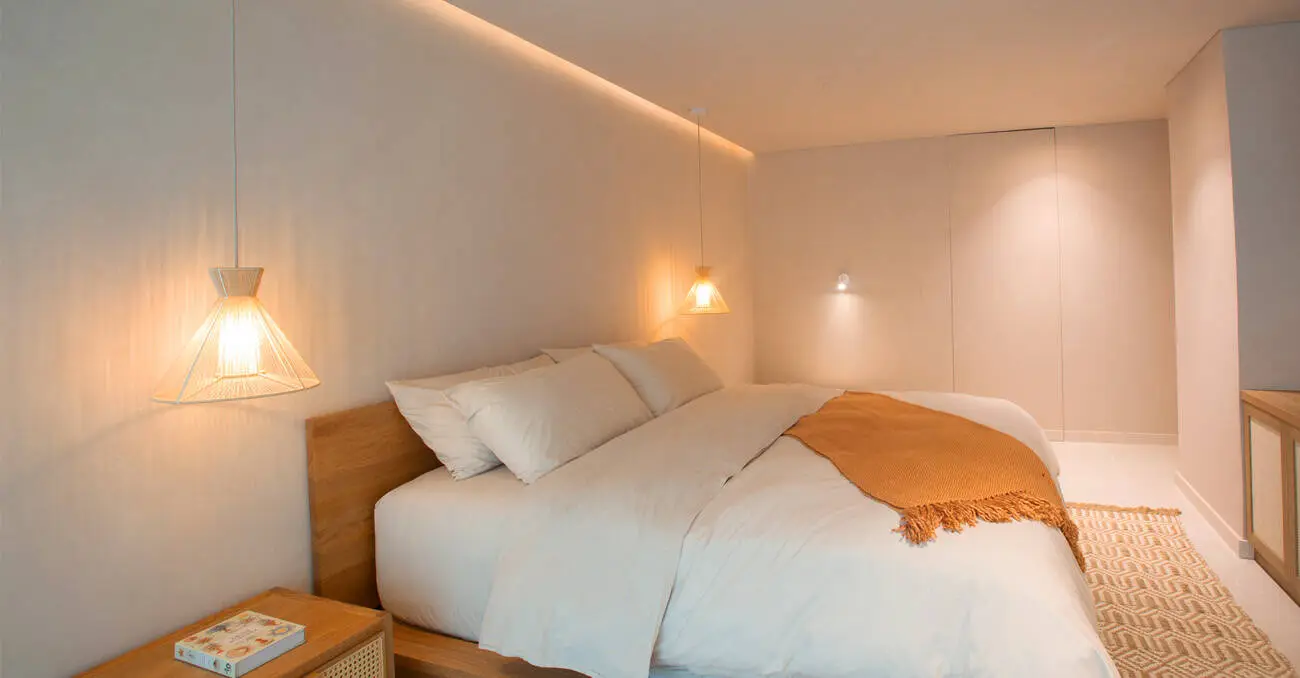
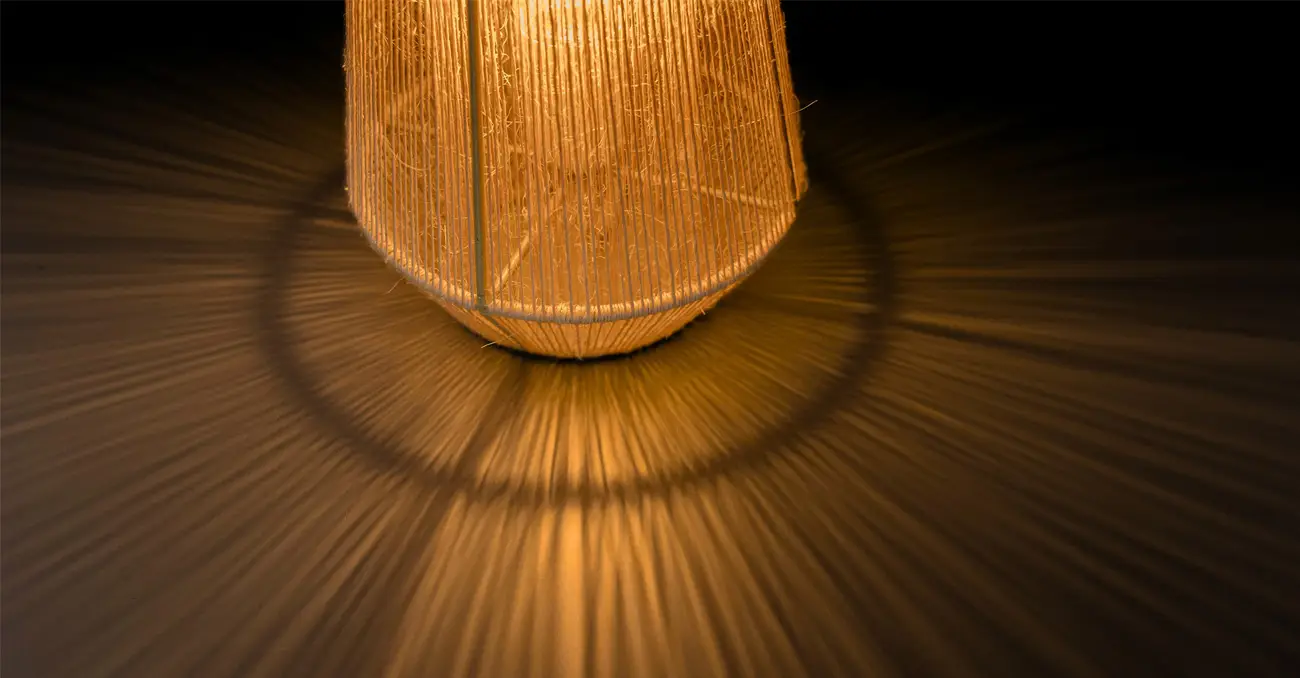
In interior lighting design, attention is often focused on light as the primary element. However, it is shadow—the subtle presence that emerges when light encounters a boundary—that ultimately gives form to space. Designing with light necessarily implies designing with shadow. Shadow is a design tool that enables the reading of architecture, the understanding of volumes, and the establishment of spatial hierarchies, allowing contrast, scale, and depth to be perceived. When a space is overlit, everything becomes visible, yet nothing stands out. Lighting that incorporates shadow as part of its language allows certain elements to gain prominence, others to recede, and the overall composition to achieve visual rhythm and balance.
El material juega un papel fundamental en la forma en que la luz se transforma en sombra. Las fibras naturales y los tejidos artesanales no bloquean la luz; la filtran y la modulan. En lámparas como Tatacoa o Nuquí, el tejido genera tramas de luz y sombra que se proyectan suavemente sobre muros y superficies, aportando profundidad y dinamismo sin rigidez. En piezas como Nasaya o Veracruz, la luz atraviesa la fibra de manera controlada, produciendo sombras cálidas que acompañan el espacio sin imponerse.
Esta relación entre luz y sombra tiene un impacto directo en el bienestar. Las sombras bien diseñadas reducen el deslumbramiento, suavizan los contrastes y contribuyen a una sensación de recogimiento. En espacios destinados al descanso como salas, dormitorios o rincones de lectura, la sombra actúa como un elemento que favorece la calma. Lámparas de mesa como Maicao o Charalá generan una luz cercana y contenida, acompañada de sombras suaves que invitan a disminuir el ritmo. En espacios de mayor escala, una lámpara de piso como Magdalena introduce un plano de luz vertical que aporta profundidad, permitiendo que la sombra construya atmósfera sin invadir el entorno.
Shadow is often perceived as something to be eliminated. The number of luminaires is increased, light levels are raised, and uniform illumination is pursued. The result is frequently an overexposed space lacking nuance and character. Designing with intention requires recognizing shadow as an integral part of the project: working with layered lighting strategies, selecting luminaires that filter light rather than expose it directly, and allowing certain areas to remain in partial darkness. A well-lit space is not the one that achieves the highest level of brightness, but the one that attains a balanced relationship between light and shadow.
At Seese, we understand light as a material and shadow as its necessary counterpart. Each luminaire is designed to transform light into atmosphere, allowing shadows to contribute depth, texture, and emotional quality. Inhabiting a space involves not only living with light, but also with the shadows it creates.