Light is not static. It evolves throughout the day, and with it, the functional and perceptual needs of a space. Effective lighting design should not be conceived as a single fixed scene, but rather as a sequence that responds to changing conditions and activities over time.
Morning: light to activate and support
In the morning, natural light is the primary source of illumination. Artificial lighting should complement it without competing, reinforcing spatial clarity and visual comfort without dominating the environment. At this stage, light should feel light, controlled, and functional.
Luminaires that provide visual presence without creating heavy shadows or excessive contrast are ideal. Smaller-scale pendants or fixtures with restrained forms work well in kitchens, studios, and shared areas. Designs such as Guajira or Leticia support natural daylight while contributing to spatial order and visual coherence.
Afternoon: transition and balance
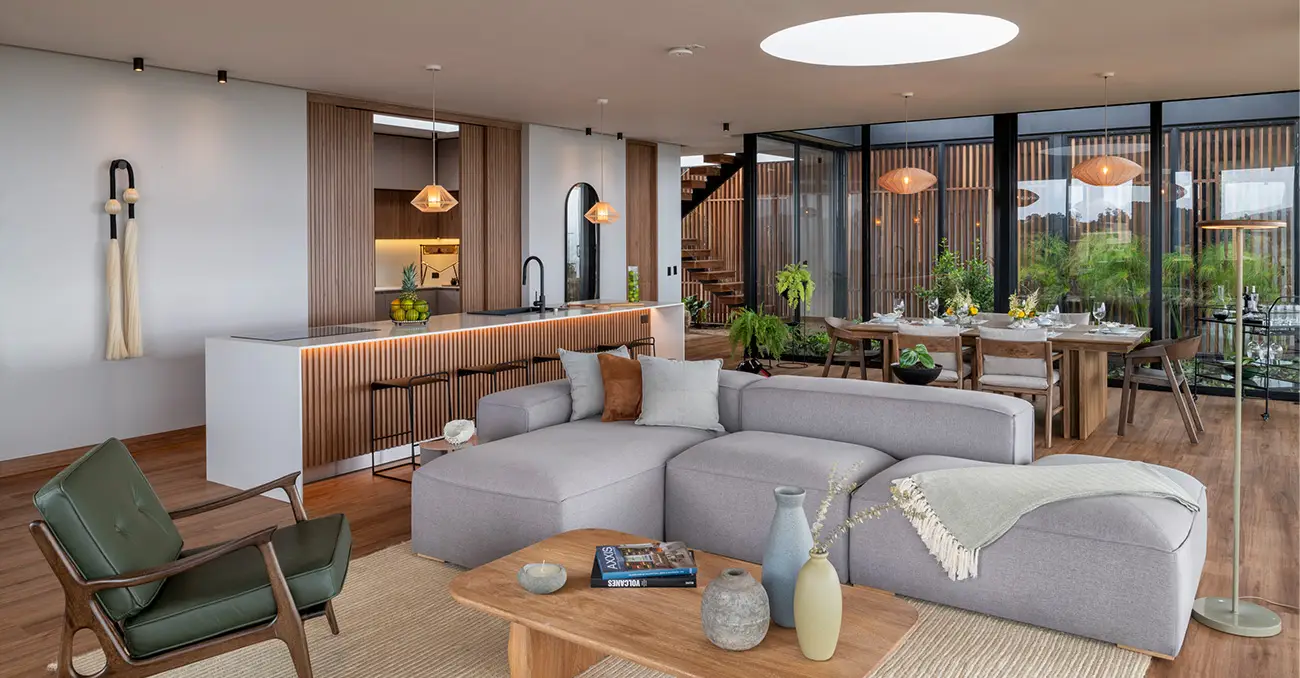
As natural light decreases, the space enters a transitional phase. Artificial lighting begins to play a more active role, mediating the shift between day and night. This is an ideal moment to introduce layered lighting strategies: combining pendant fixtures, task lighting, and decorative luminaires to add depth and spatial hierarchy.
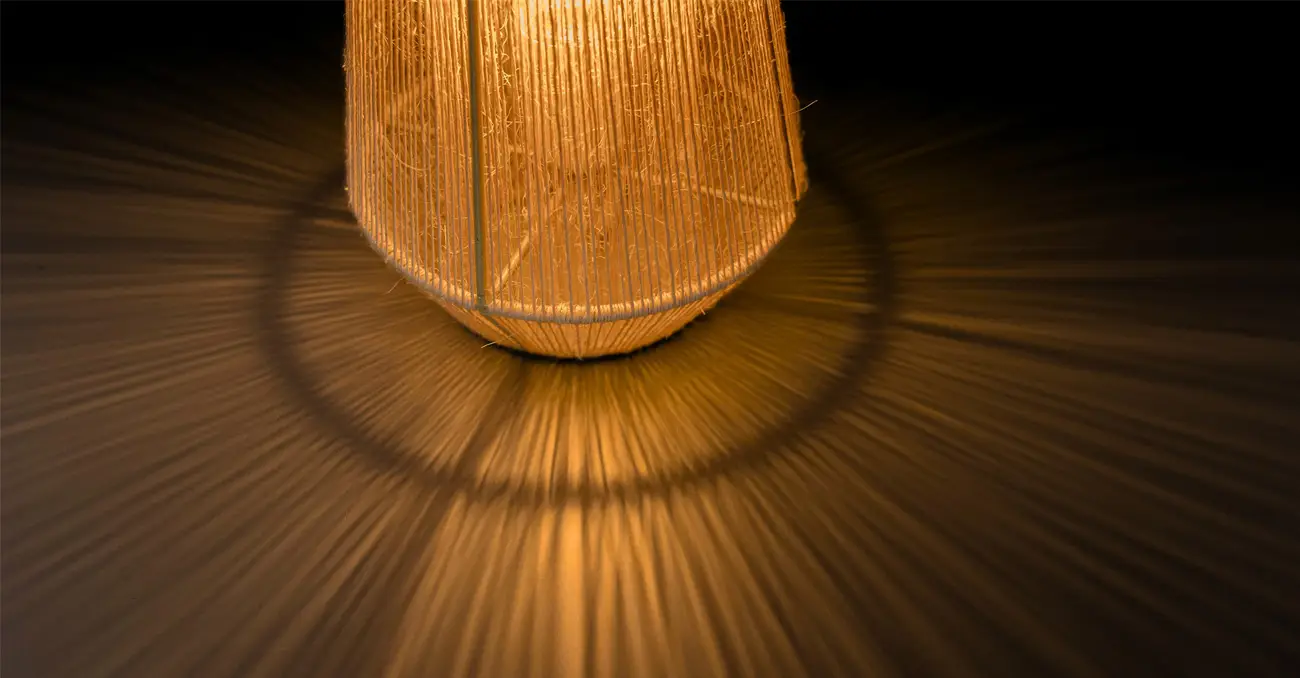
In living and dining areas, fixtures such as Nasaya or Veracruz start to define the atmosphere. Their woven construction diffuses light softly, producing controlled shadows that enrich the spatial experience without visual overload.
Night: light to reduce visual stimulation
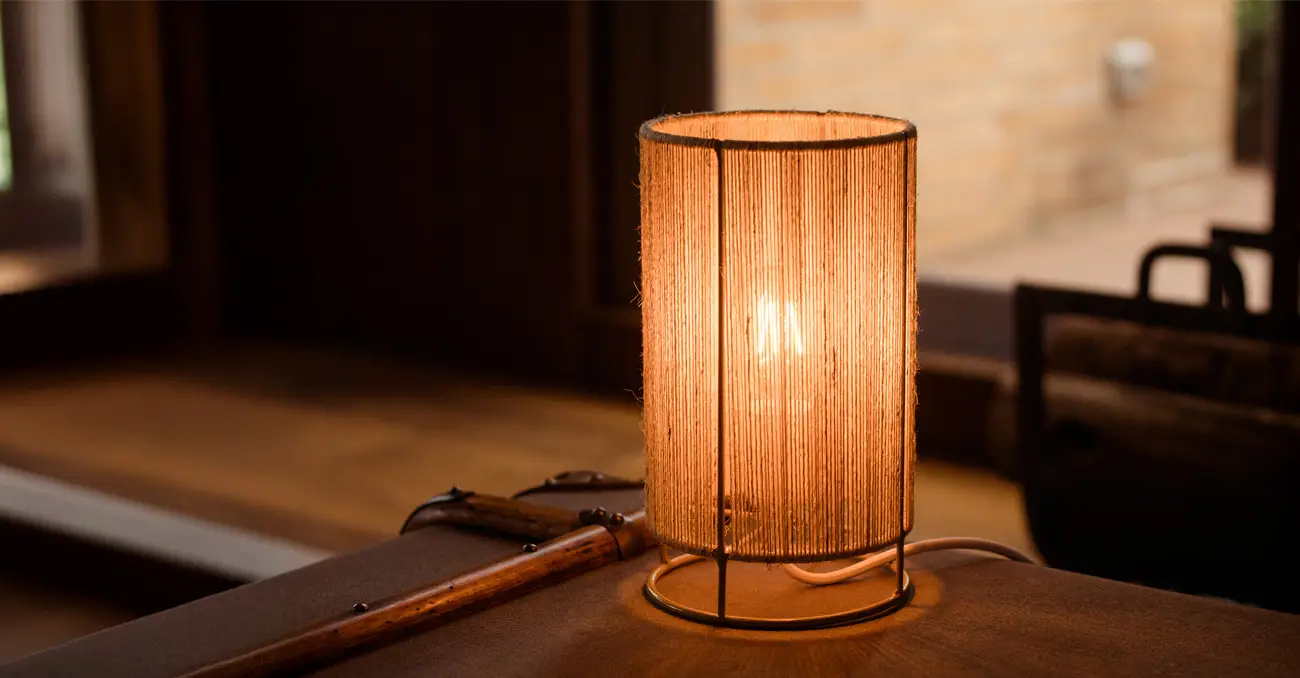
At night, lighting should support rest and visual calm. Light levels should be reduced, glare minimized, and the environment allowed to feel more intimate and contained. Indirect lighting, warm color temperatures, and luminaires with handcrafted materials perform best in this context.
Table lamps such as Maicao or Charalá provide localized, low-level illumination suitable for living spaces, bedrooms, or reading areas. In larger interiors, a floor lamp like Magdalena introduces a vertical plane of light that enhances spatial depth while maintaining visual balance.
Lighting as a sequential system
Rather than selecting a single fixture, effective interior lighting design requires thinking of light as a system. Multiple sources, varied mounting heights, and materials that modify light distribution allow a space to adapt throughout the day.
When lighting is designed as a sequence rather than a singular solution, spaces become more flexible, legible, and comfortable to inhabit. At Seese, lighting is understood as an architectural tool. Each luminaire is designed to respond to daily rhythms, engage with architectural elements, and contribute to atmospheres that are experienced on both a functional and perceptual level.